Augmented reality
This list highlights the top AR apps of 2026, showcasing how AR is transforming user experiences in industries from retail to education. These applications provide users with engaging, practical tools for enhanced interaction and learning. Each app stands out for its user experience, technological innovation, and ability to achieve meaningful results.

Table of contents
Top Augmented Reality Apps of 2026
Piano Vision
Pokémon Go
Meta Display - Navigation
Lowe's Style Studio
Puzzling Places
IngressPrime
Figmin XR
IKEA Place
Asos AR app
Impact on Business Goals
Analysis of how these AR apps have helped brands achieve their objectives, including increased engagement and improved customer satisfaction.
Industry Applications
Exploration of the diverse industries benefiting from AR technology, showcasing specific use cases and success stories.
Conclusion
Final thoughts on the transformative role of augmented reality in modern business and its potential for future growth.
Key Takeaways
The AR app market is constantly shifting and incredible AR experiences emerge every year.
There are a variety of industries and some AR apps excel at certain tasks, so determining which app is the best AR app of 2026 is hard.
Takeaway Reality is one of the leading developers of AR apps. Learn more on our AR app development page.
What is Augmented Reality?
Virtual reality (VR) is a technology that creates a simulated environment that can be interacted with using a headset and controllers. VR can offer immersive and engaging experiences that can transport users to different worlds and scenarios. For example, it can transport someone into a branded environment such as VR for Events does. But VR is not only a form of entertainment, it can also be a tool for enhancing physical activity and health. In this article, we will explore how VR can benefit physical activity in various ways, such as reducing stress, improving balance, increasing motivation, and providing fun and variety. VR can also be used in the real world such as VR at events.

Best Augmented Reality Experiences in 2026
Piano Vision
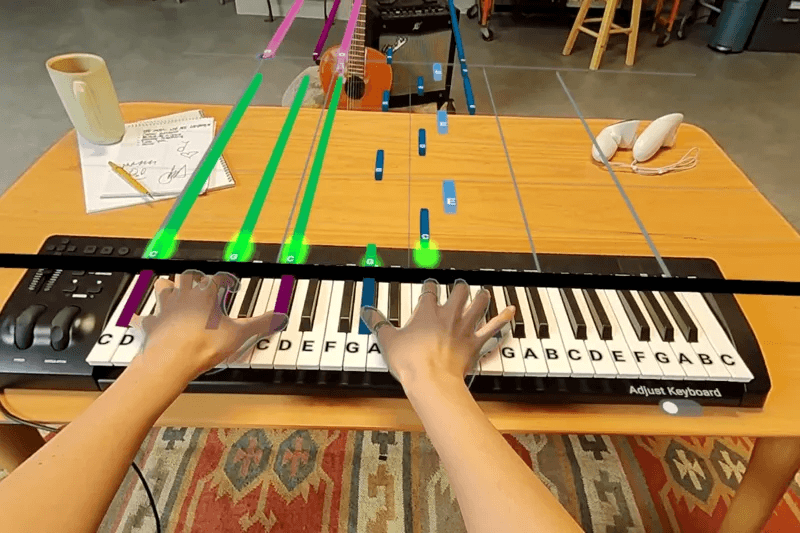
PianoVision (often experienced on the Meta Quest 3) has emerged as one of the most innovative augmented and mixed-reality apps of 2026, especially for music lovers and aspiring pianists. Rather than a traditional piano learning tool, PianoVision blends immersive mixed-reality visuals with real-world practice, effectively turning that often daunting first step into an engaging, interactive experience.
At its core, PianoVision overlays visual cues directly onto a physical keyboard or a virtual one within your living space. As notes cascade toward you, much like in rhythm games, you simply follow along in real time — a design that makes learning accessible even to absolute beginners while still offering utility for more advanced players. The app supports connection to actual MIDI keyboards or adaptation to an acoustic piano, enabling users to practice with tactile feedback that mirrors real-world playing.
What sets PianoVision apart in the crowded AR app landscape is its adaptive learning approach and extensive content library. It breaks songs into manageable sections, tracks performance metrics like timing and accuracy, and offers customized practice routines that grow with the user’s skill. Recent updates expand this further with thousands of licensed songs and even AI-driven guidance, making it both fun and educational.
While opinions vary on how deeply it teaches formal music theory, most users praise PianoVision for lowering the barrier to entry and for transforming piano practice into something truly memorable. In 2026’s AR ecosystem, it remains a shining example of how immersive tech can enrich artistic learning.
Pokémon Go

Pokémon Go is a mobile game that allows players to catch and battle virtual creatures called Pokémon in the real world. The game uses the GPS and camera of the player's device to show a map of their surroundings and overlay Pokémon on it. Players can explore different locations to find different types of Pokémon, and use items such as Poke Balls to capture them. Captured Pokémon can be used to fight other players in gyms, which are landmarks that can be controlled by one of three teams: Instinct, Mystic, or Valor. Players can also join raids, which are cooperative battles against powerful Pokémon that require multiple players to defeat. Pokémon Go is a fun and immersive way to experience the Pokémon universe and interact with other players.
The game was released in 2016 and became a global phenomenon, generating billions of dollars in revenue for its developer Niantic and its partner Nintendo. According to Sensor Tower, a market research firm, Pokémon Go has surpassed $6 billion in lifetime player spending as of November 2020, making it one of the most successful mobile games ever. The game has also attracted over a billion downloads and has an active user base of over 150 million players. Pokémon Go's business results are driven by its innovative gameplay, loyal fan base, frequent updates, and partnerships with various brands and organizations.
Meta Display - Navigation
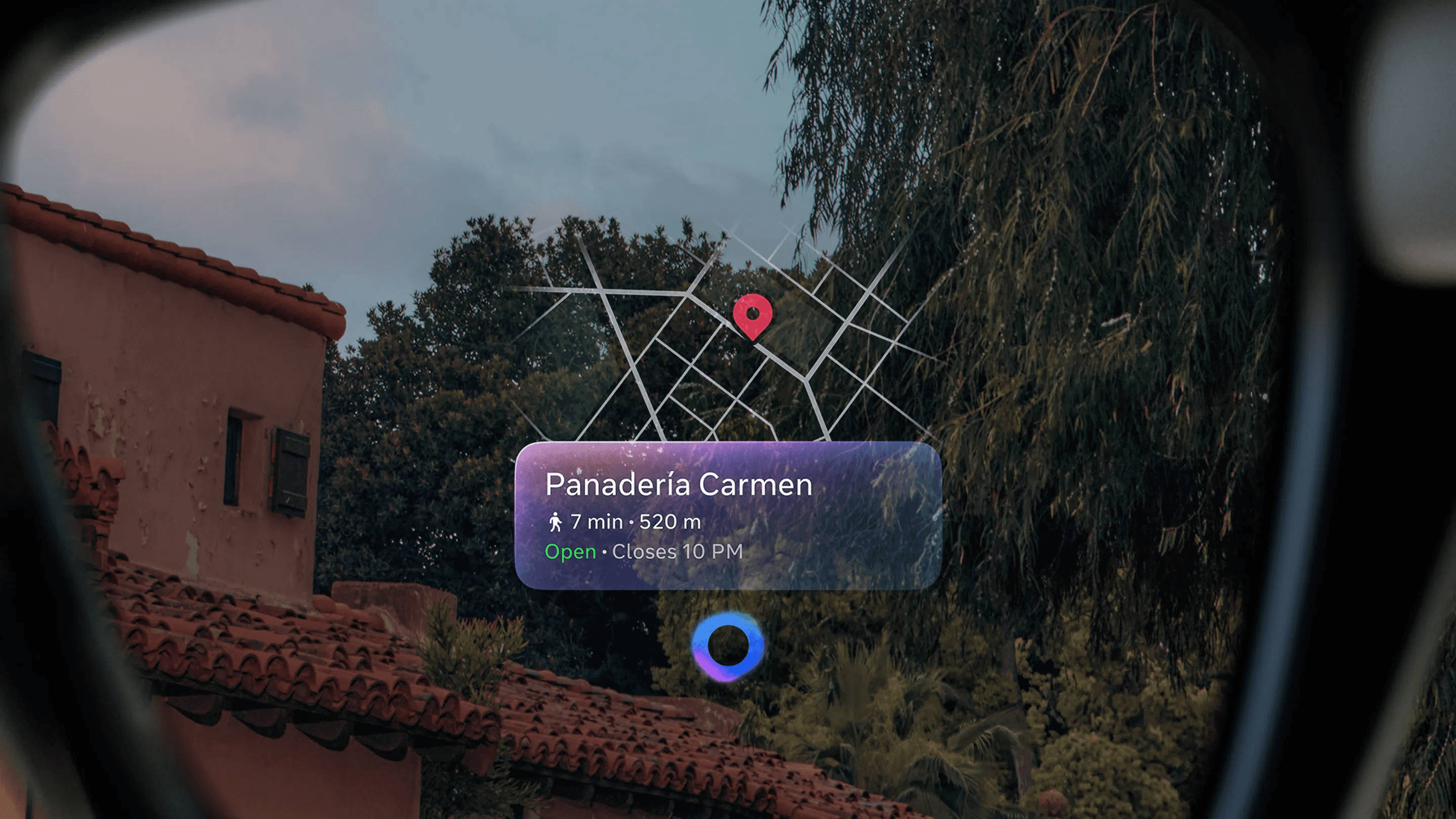
The pedestrian navigation feature on the Meta Ray-Ban Display glasses offers a glimpse into the future of urban exploration, seamlessly blending digital guidance with the physical world through an in-lens display. This AR experience is designed for users who want to stay present and navigate unfamiliar streets without constantly looking down at their phone. By leveraging GPS data, the glasses' ultrawide camera, and the Meta AI mobile app, the system translates complex map information into simple, actionable visual cues, such as arrows and mini-maps, projected onto the user's field of vision. The experience can be further enhanced using the Meta Neural Band, which allows wearers to zoom in/out of the map or recenter their location with subtle hand gestures.
However, as of early 2026, the navigation application remains in beta and has some significant limitations that an article on "Best AR Apps of 2026" should consider. The app currently only supports pedestrian walking routes and is limited to a selection of specific cities, with long-distance navigation between cities being unavailable. The map data is sourced from Overture and OpenStreetMap, not Google Maps, which may affect familiarity and detail in some regions. Despite these constraints, the core functionality of receiving hands-free, private directions that appear "crisp enough" even in direct sunlight highlights the potential for AR navigation to become an indispensable tool in the future. The implementation is a strong proof-of-concept for how contextual, glanceable information can change the way we interact with our environment.
Lowe's Style Studio
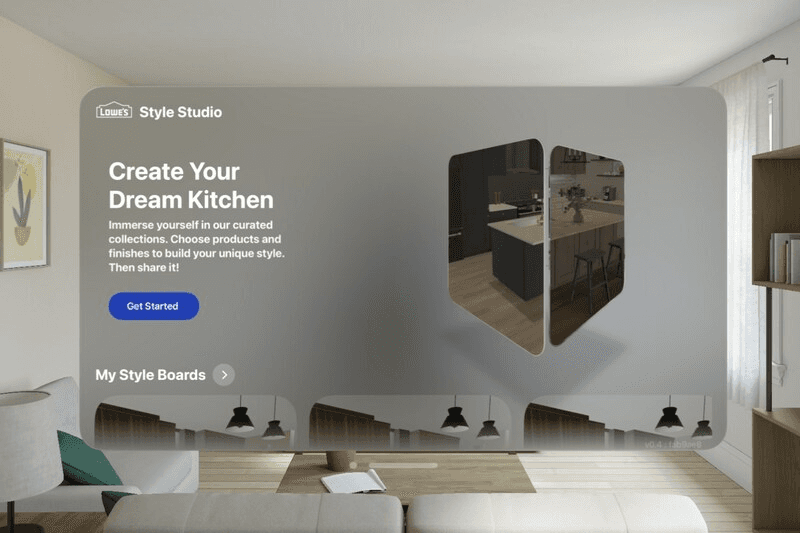
The Lowe's Style Studio app for the Apple Vision Pro allows customers to virtually test paint colors, flooring, and other home improvement products in their own homes before making a purchase.
Lowe’s Style Studio is one of the clearest examples of spatial computing delivering real-world value—not just novelty. Built exclusively for Apple Vision Pro, the app turns your physical space into an immersive kitchen showroom, letting you visualize a full kitchen refresh in minutes. Instead of flipping through endless product pages and hoping the final result matches your imagination, you can step into a high-fidelity 3D kitchen environment and experiment with near-infinite combinations of styles and finishes.
The experience is designed around Vision Pro’s natural input: look, tap, and adjust. You can quickly audition colors, materials, and key kitchen elements—think cabinets, countertops, fixtures, and more—while keeping a strong sense of scale and layout that traditional configurators struggle to deliver. Apple has even highlighted the app as a showcase example of how spatial models make it easier to customize kitchen components in a way that feels immediate and intuitive.
What makes it especially “best-of-2026” material is how Lowe’s has pushed it beyond the living room. After launching on the App Store in early 2024, Lowe’s expanded the concept into in-store experiences and pilots, pairing the immersive visualization with associate support—bridging inspiration, planning, and shopping into one seamless flow.
Puzzling Places

Puzzling Places has evolved into one of 2026’s most beloved spatial computing and AR/VR puzzle apps, blending meditative gameplay with stunning real-world locations rendered in immersive 3D. Rather than a typical game with frantic action, Puzzling Places invites you into a relaxing world where you assemble intricate 3D jigsaw puzzles crafted from high-resolution photogrammetry scans of actual places from around the globe — from charming cabins to iconic heritage sites.
What makes Puzzling Places stand out in the AR/VR space is both its simplicity and serenity. Instead of timers or competitive elements, the focus is purely on the satisfaction of discovery: dragging and placing pieces that gradually reveal miniature dioramas rich with detail and life-like textures. Each puzzle comes with its own handcrafted soundscape that evolves as you progress, adding an atmospheric layer to the tactile joy of piecing together fragments.
By 2026, the app has been optimized across major spatial computing platforms, including Meta Quest and Apple Vision Pro — where its interface is redesigned to seamlessly mix gaze and hand-tracking controls in shared spatial environments. Puzzling Places offers varying difficulty levels from gentle 25-piece puzzles up to challenging 200 (or more) pieces, making it accessible for casual players while still satisfying puzzle aficionados.
Whether you’re sinking into a VR headset or enjoying mixed reality on VisionOS, Puzzling Places turns classic puzzle solving into a calming journey through beautiful, photoreal locations — an ideal pick for anyone looking to unwind with spatial computing in 2026.
IngressPrime

Ingress Prime is a massively multiplayer augmented reality mobile game developed by Niantic, the same company behind the popular game Pokémon Go. The game was first released in 2012, and was later rebranded as Ingress Prime in 2018. The game uses real-world maps and GPS to create a virtual battle for control of real-world landmarks and locations.
In the game, players are divided into two teams, the "Resistance" and the "Enlightened", and the goal is to capture and control "portals" located at real-world landmarks such as statues, monuments, and public art. Players can hack portals to gain valuable resources, build virtual links between portals to establish control over territory, and deploy virtual items called resonators to reinforce the portals they control.
Ingress Prime is a unique and interesting game that combines elements of augmented reality and location-based gaming, giving players an exciting new way to explore the world around them. The game encourages players to explore real-world locations and provides an extra layer of interactivity by including virtual elements to the real-world landmarks and locations. Players can also interact with each other, playing the game in the same physical location and forming teams to strategize and work together to capture portals. It's an innovative way to bring players out of their homes and into the real-world for an augmented reality adventure, giving it a unique sense of immersivity and community-building aspect. This popular mobile game shows the potential of creative storytelling through Augmented Reality and has a large user base. It uses real-world maps and GPS to create a virtual battle for control of real-world landmarks and locations.
Figmin XR
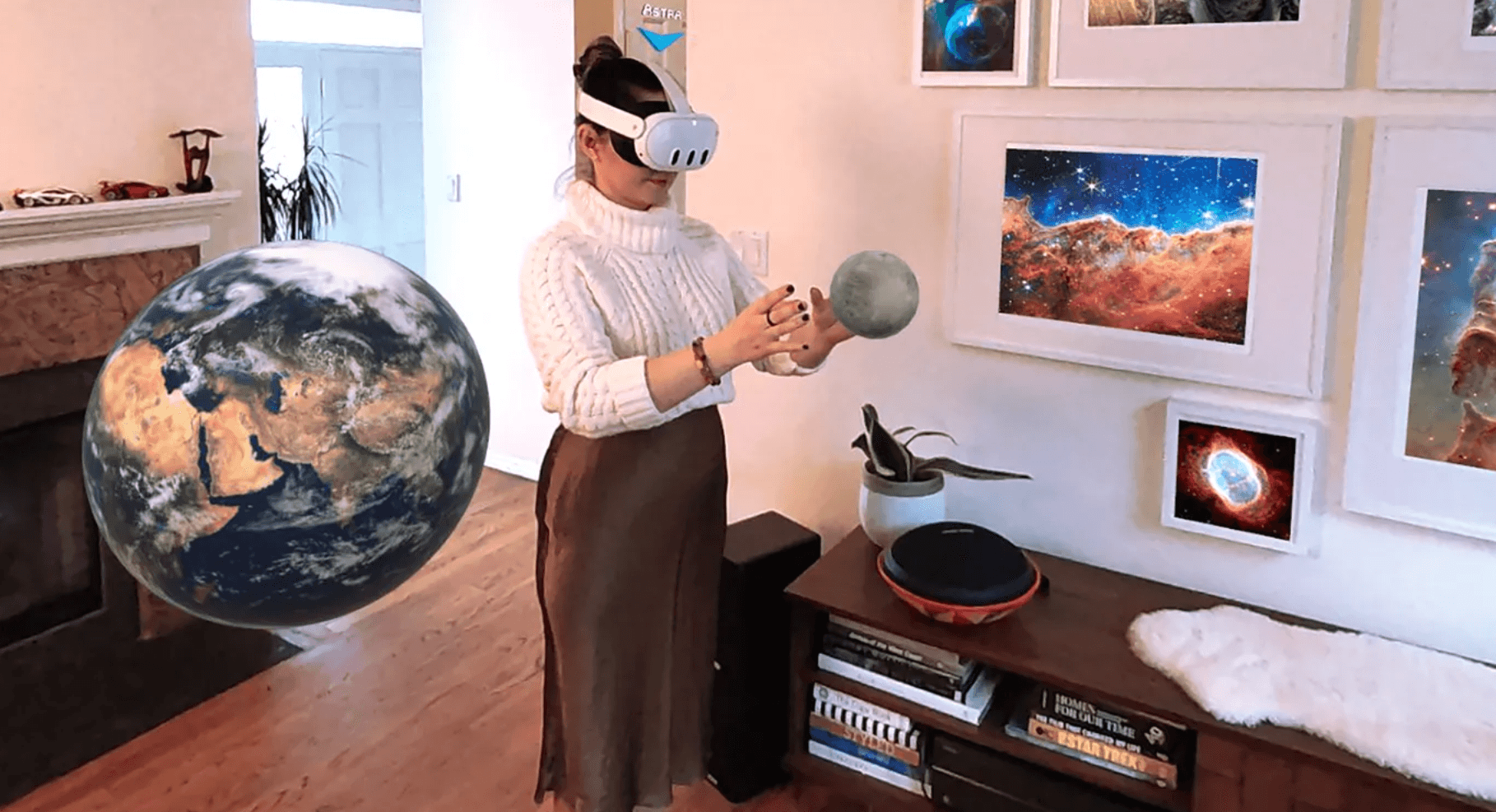
Figmin XR is one of the most “2026” AR/mixed-reality apps you can put on a Meta Quest 3: it’s not a single-purpose tool, it’s a creative sandbox where your real room becomes the stage for sketches, objects, physics experiments, and playable scenes. The core idea is simple—create, collect, and play in mixed reality—but the execution is what makes it a standout: an intuitive MR-first interface, a huge range of building tools, and multiplayer so you can actually share what you’re making instead of keeping it trapped on your headset.
Where many AR apps feel like demos, Figmin XR feels like a platform. You can paint and build in 3D, decorate your space with imported assets, and mash together art and interaction using lighting and physics to make scenes feel “alive.” It also supports Tilt Brush content, which is a big deal if you’ve ever wanted to bring older VR artwork into a modern mixed-reality workflow.
It’s especially strong as a social MR experience: Figmin XR has been demonstrated with co-located mixed reality across different headsets (including Quest 3 and Apple Vision Pro), pointing toward the kind of shared spatial computing future people keep promising.
IKEA Place
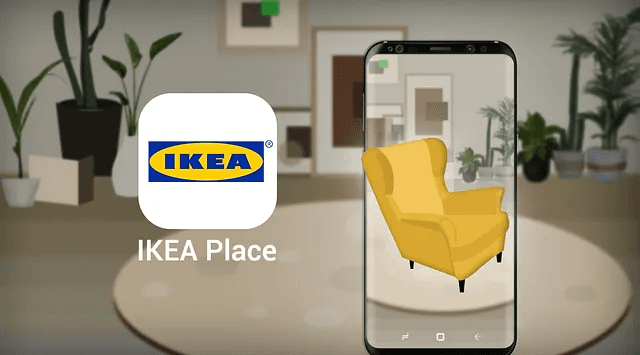
IKEA Place is an app that allows customers to virtually place IKEA products in their own homes using augmented reality (AR). The app helps customers to visualize how the products would fit and look in their space, and to make more informed and confident purchase decisions. IKEA Place also provides product information, such as dimensions, colors, and prices, and links to the IKEA website for online ordering.
IKEA Place has been a successful app for IKEA, as it has increased customer engagement, satisfaction, and loyalty. According to a case study by Google, IKEA Place has been downloaded over 12 million times since its launch in 2017, and has generated over 2.3 billion product views. The app has also improved the conversion rate of online sales by 11%, and reduced the return rate by 22%. Moreover, the app has enhanced the brand image of IKEA as an innovative and customer-centric company, and has received positive feedback from users and media outlets.
ASOS AR App
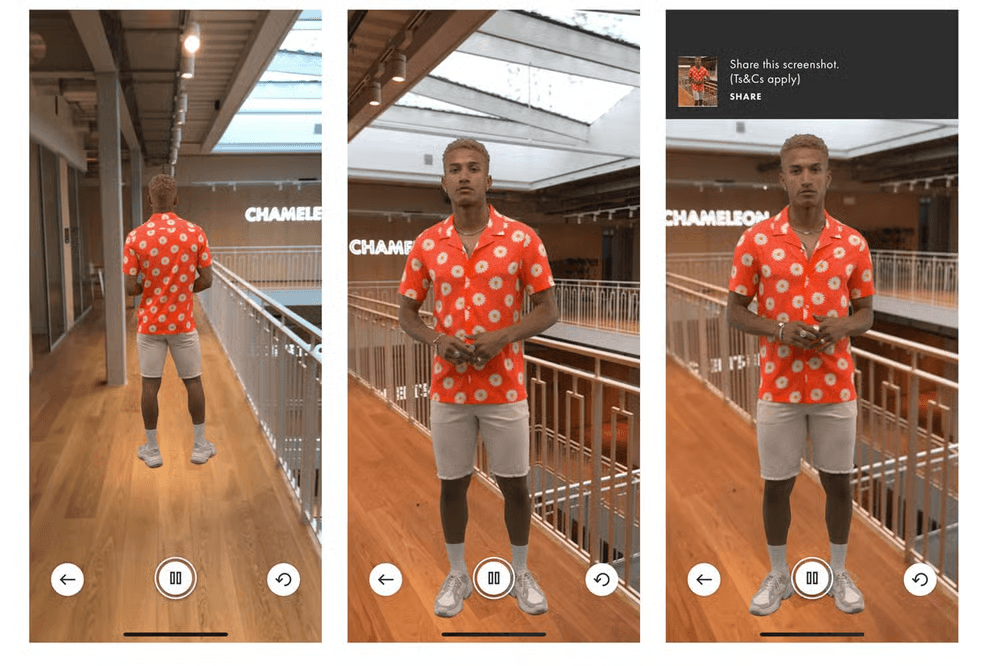
Online fashion retailer, ASOS has an AR feature on its mobile app, where customers can view an item of clothing on a virtual model, providing a better sense of how it might look and fit on them.
The ASOS mobile app allows customers to view an item of clothing on a virtual model, providing a better sense of how it might look and fit on them. This is done by using the customer's own body measurements to create a virtual model that is unique teach individual. This feature makes it easier for customers to envision how a particular item of clothing might look on them, before making a purchase. Additionally, the company uses AR technology to create virtual fitting rooms, where customers can try on clothes virtually, before making a purchase.
ASOS's use of AR technology Isan example of how retailers are using new technologies to improve the customer experience. Not only it is convenient but also it could save a lot of hassle and returns as the customer can make a well-informed purchase decision. AR technology has the potential to revolutionize the way we shop, and ASOS is one of the first retailers to take advantage of this technology. As technology continues to advance, we can expect to see more retailers using AR in their mobile apps to enhance the customer experience and make it easier for customers to find clothes that fit them
Conclusion
The AR market is experiencing high year-on-year growth and 2026 might just be the year when it goes mainstream. As the first AR glasses such as the Meta Display Glasses are already hitting the market, it will be interesting to see all of the new apps releasing.
Reach out to us today and lets create unforgettable AR experiences!
Frequently Asked Questions
Is there something related to this case study on your mind? Take a look at some of the questions we think might interest you!
What criteria were used to select these top AR apps?
In which industries are these AR apps making a significant impact?
How have these AR apps benefited businesses?
What are some of the best augmented reality apps of 2024?
Can't find the question you are looking for?
Send us a message and we'll get back to you as soon as possible!
Latest
Take a look at our related articles


Send us a message and expect our reply as soon as possible!