Augmented reality
This blog explores how augmented reality (AR) is transforming education by making learning more interactive, engaging, and accessible. It highlights practical AR tools, real classroom applications, and the impact on student learning, collaboration, and remote education. Whether you're a teacher, student, or tech enthusiast, this guide shows how AR can enrich lessons and enhance the overall learning experience.
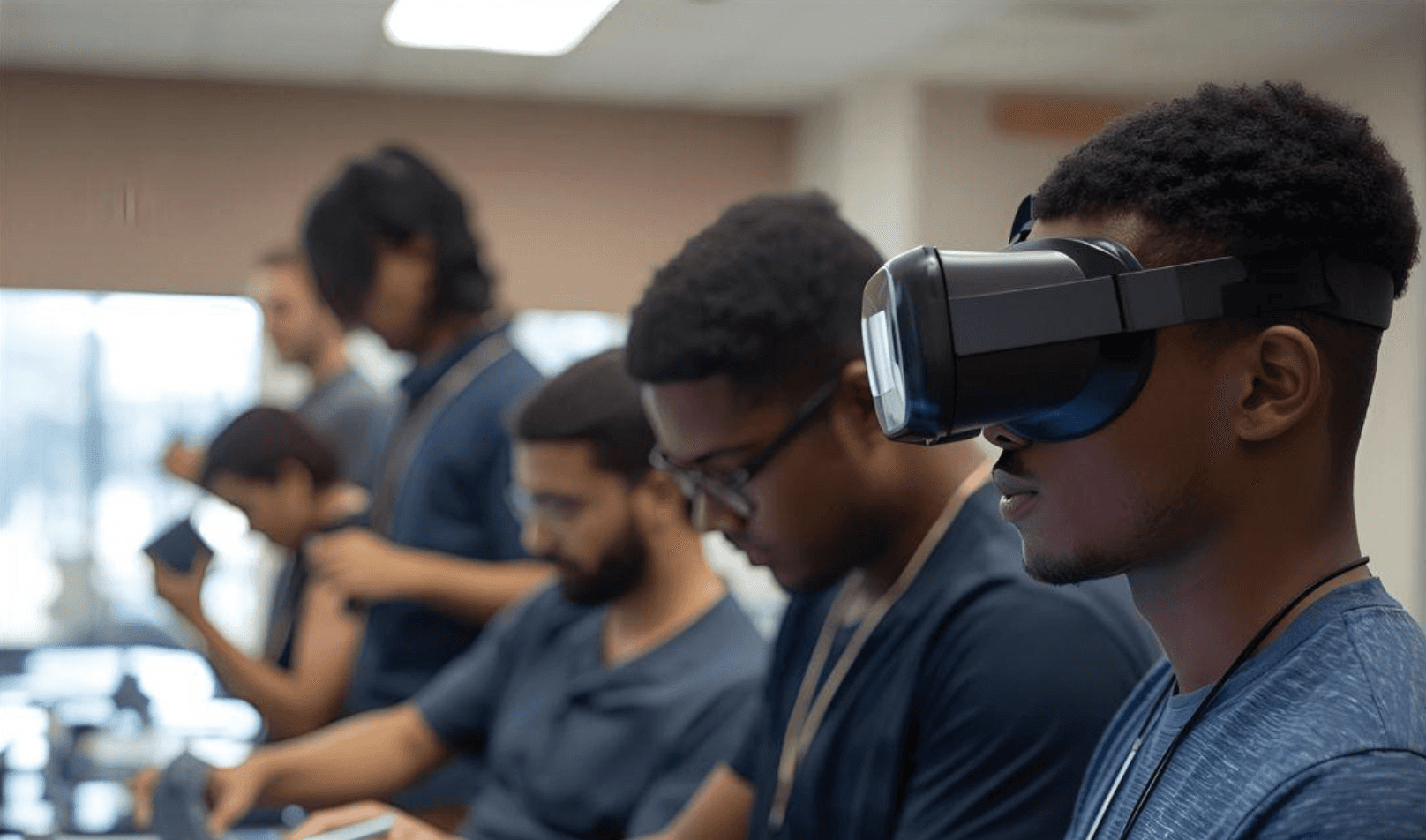
Table of contents
Key Takeaways
AR enhances engagement and accessibility by transforming traditional lessons into interactive, immersive experiences that increase motivation and improve long-term retention
Teachers can use AR with devices they already have, such as tablets or smartphones, making it a cost-effective solution even for schools with limited resources
Professional development is essential as teachers benefit from learning how to create or adapt AR materials and integrate them into lessons
AR supports diverse learning needs, enabling personalized, contextualized, and multimodal learning experiences suitable for various subjects, especially STEM, language learning, and medical education
Collaborative learning improves with AR, providing shared virtual environments that help students develop social skills, creativity, and teamwork in a manageable, structured way
Remote and online learning become more immersive through AR, allowing hands-on practice and real-world context even when learners are physically distant from teachers or school facilities
AR Tools and Resources for Teachers
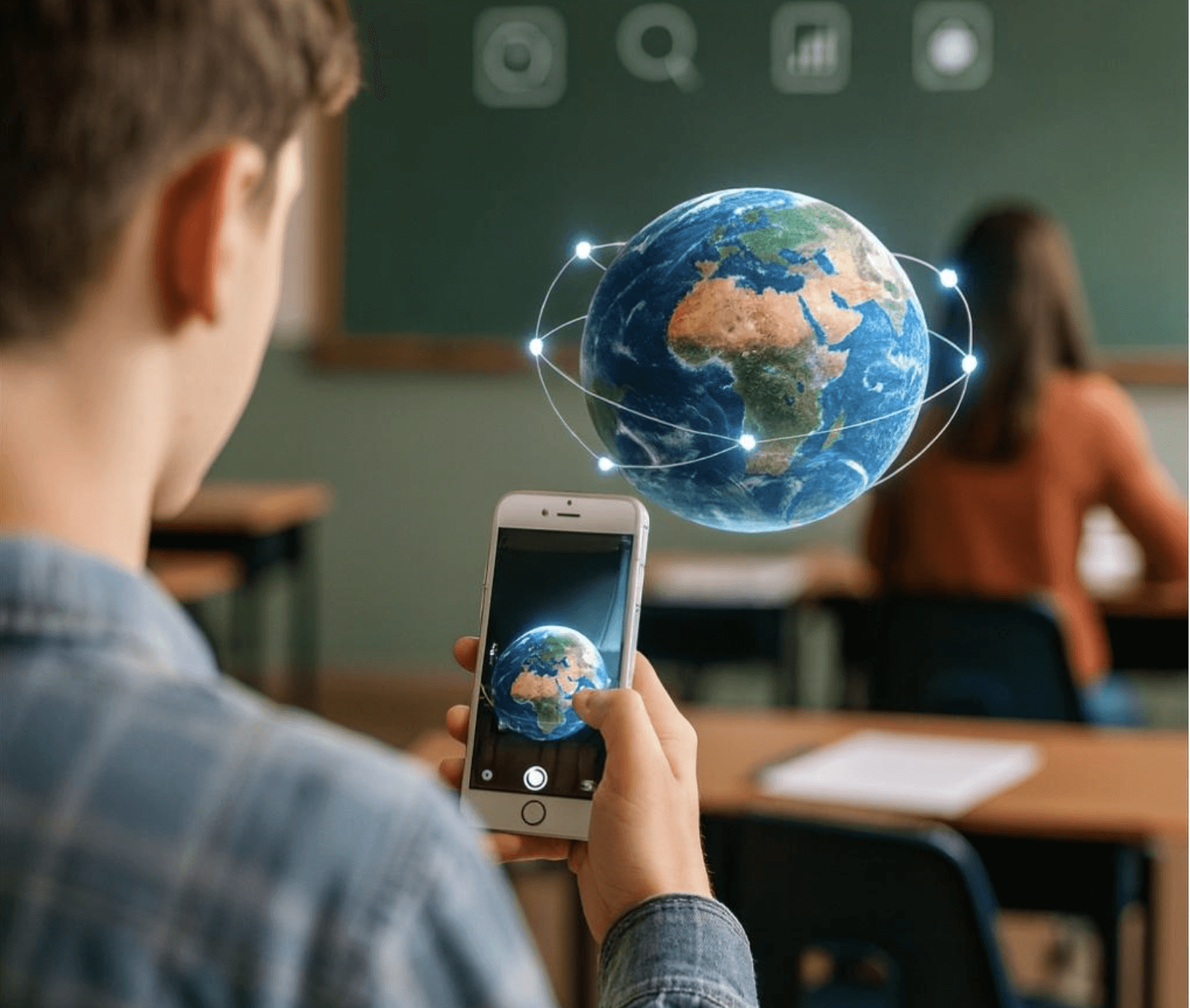
AR is a flexible tool for dealing with issues related to disengagement. Teachers may create more interesting and dynamic learning experiences in their classrooms by applying it. This increases overall student engagement while also fostering a stronger connection to the curriculum.
Most schools already have access to tablets, smartphones, computers with webcams, and occasionally mobile AR headsets. Multiple companies offer these products to help teachers and students learn better.
Examples of these companies are visible on our blog showcasing best augmented reality companies.
These tools can project virtual elements onto real-world surfaces. In astronomy, for instance, augmented reality in education allows students to hold their GPS-enabled smartphones to the night sky and see the labels of stars, constellations, and planetary bodies.
AR can help schools with limited IT resources because it does not require expensive VR headsets and controllers. Using secure remote access, educators and support personnel can assist with setup, monitor devices, or troubleshoot AR programs.
Teacher Training and Professional Development
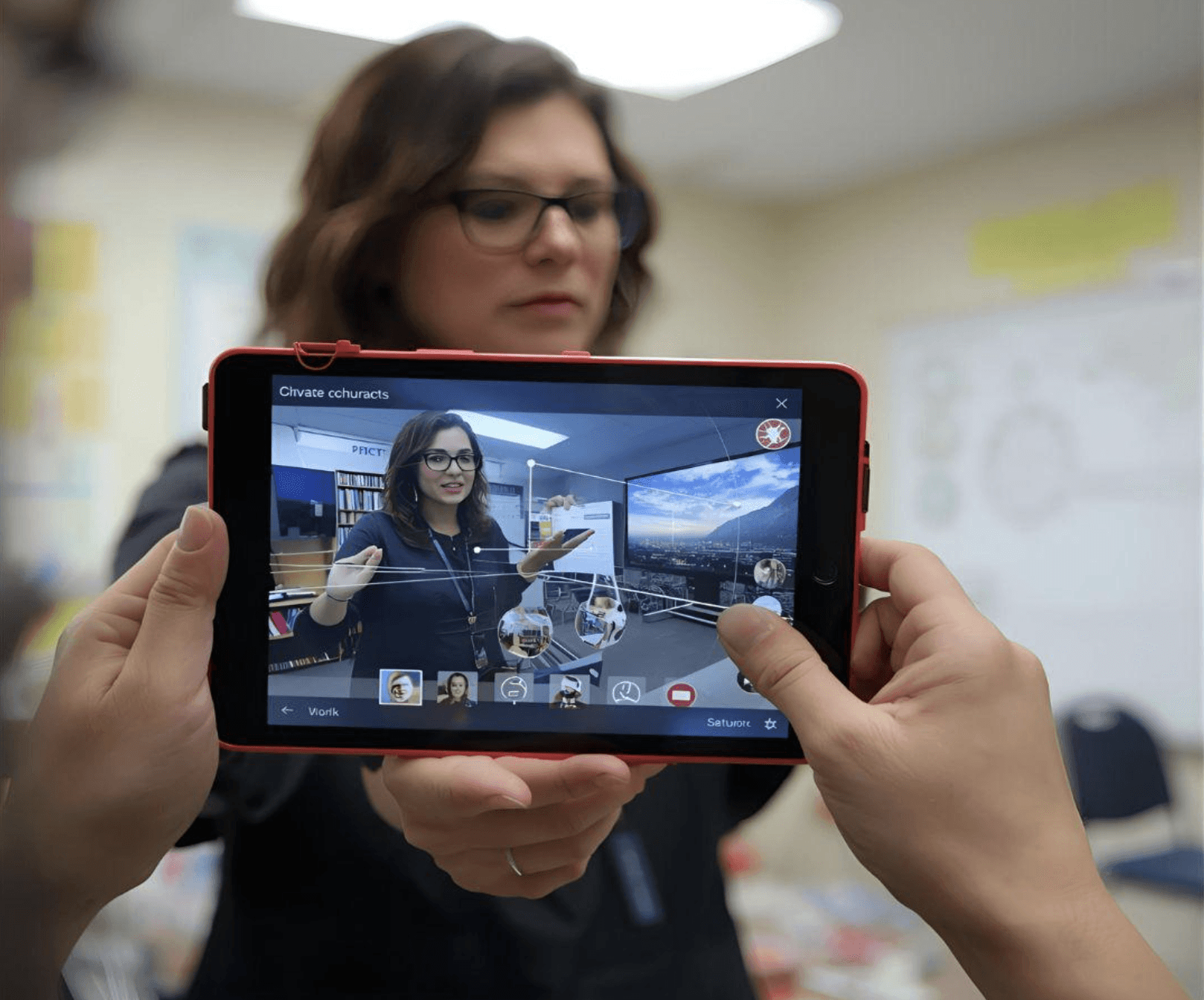
By creating new AR materials and using existing ones, teachers can always benefit from the outstanding quality of AR learning environments. Teachers may utilize AR content with a variety of easily available AR applications.
With the help of these apps, abstract knowledge may be represented interactively, enabling teachers and pupils to produce an augmented reality curriculum in a variety of topic areas.
Teachers and students may design their own augmented reality experiences with the help of AR apps like Google Expeditions and Thinglink, which provide real-world environments for realistic and contextualized learning. For one class, teachers should start small by implementing a straightforward augmented reality activity or 3D model exercise, then progressively expand.
Using AR resources includes interacting and working together in AR-enhanced virtual worlds, as well as the methods required to teach and assess in AR learning environments and provide meaningful AR-based coaching and feedback.
Examples of AR Applications in Education
Augmented reality in education is very useful for teaching STEM topics. Students may investigate abstract ideas, carry out experiments, and see complicated phenomena in a secure setting by using AR simulations and virtual labs.
Medical students may practice anatomy, surgical techniques, and patient diagnostics in a realistic yet risk-free environment thanks to augmented reality.
Additionally, by immersing students in virtual settings where they may engage with native speakers, improve their conversational abilities, and discover cultural subtleties, AR can aid language acquisition. Personalized and contextualized learning experiences tailored to specific competence levels are provided by AR language learning apps.
Moreover, by bringing historical events, objects, and monuments to life, augmented reality enhances history and culture education. Through immersive AR experiences, students may virtually visit historical locations, engage with historical characters, and experience significant historical occasions.
Moreover, both AR and VR are functional, but also intuitive and engaging. It boosts engagement, retention, and understanding by providing interactive experiences. If not certain where to start with the introduction of VR, there is a list of the best VR companies in 2025 in our blog.
By adding VR into education, both teachers and students can additionally benefit through simulations in immersive environments, making them feel present.
Impact on Student Learning
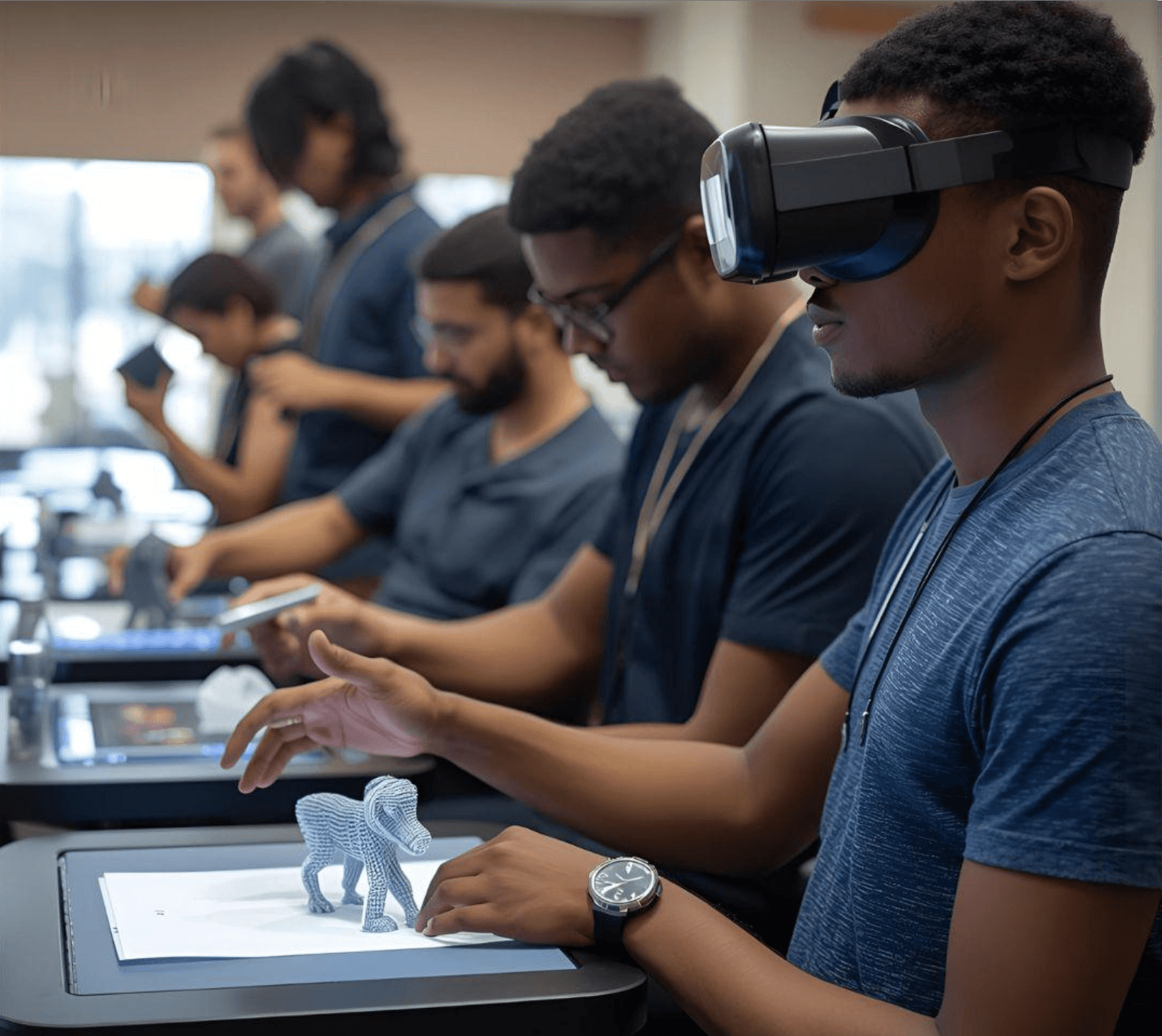
Through interactive experiences from fixed information, augmented reality in education has the potential to boost learning enthusiasm and engagement. According to research, when students actively participate in their education, they retain and learn more effectively.
Students can investigate virtual planets, historically significant landmarks, or biological systems with AR-based applications, for example, which boosts curiosity and improves long-term memory retention.
Diverse learning requirements can be supported by AR learning technologies. For students who are blind or visually handicapped, the learning process might be made more accessible using audio-supportive augmented reality information.
Gamified augmented reality platforms can also help students finish a class with fewer text-based requirements and more visual interaction. If there is an interest in adding VR into education as well, there are multiple VR development companies that can consult and develop from the beginning of an idea to its completion.
To discover more about this, visit our blog showcasing best VR development companies in 2026.
As technology becomes more affordable, it can be anticipated that personalized AR learning experiences based on each student's pace and learning style, more AR classrooms with more collaborative and interactive conditions, and a chance to connect with the developing Metaverse, would create an infinite number of students learning, interacting, and creating in immersive technology educational experiences.
AR and Collaborative Learning
To help students develop social and emotional skills, learn from one another, and have fun, teachers work hard to establish collaborative learning opportunities. Students may practice critical interpersonal skills they will need in college and the workplace through collaboration, which also increases confidence and creativity.
However, finding the time and space for cooperation in the classroom can be challenging since it calls for flexibility for the teacher to hand over control, which results in a disorganized, noisy classroom.
When purposefully created, augmented reality in education may offer brief, significant, and captivating collaborative moments that can be seamlessly included into a class alongside individual work and direct teaching.
AR is an excellent choice for teamwork because of its immersive qualities and adaptability to shared devices.

AR in Remote and Online Learning
Augmented reality in education makes information more interesting and demands involvement by adding interactive and immersive features to distance learning. Information is better understood and retained when multimedia content, including films and holograms, is used.
Additionally, AR enables teachers to provide students with practical experience and real-world context even when they are geographically apart. It aids in bridging the knowledge gap between theoretical education and real-world application.
AR provides a special chance to tailor the learning rate to each person's demands and development. It is especially important for on-the-job training, which is sometimes limited by time and location in traditional courses.
With AR, students may practice and refine their practical abilities until they are certain they have mastered them.
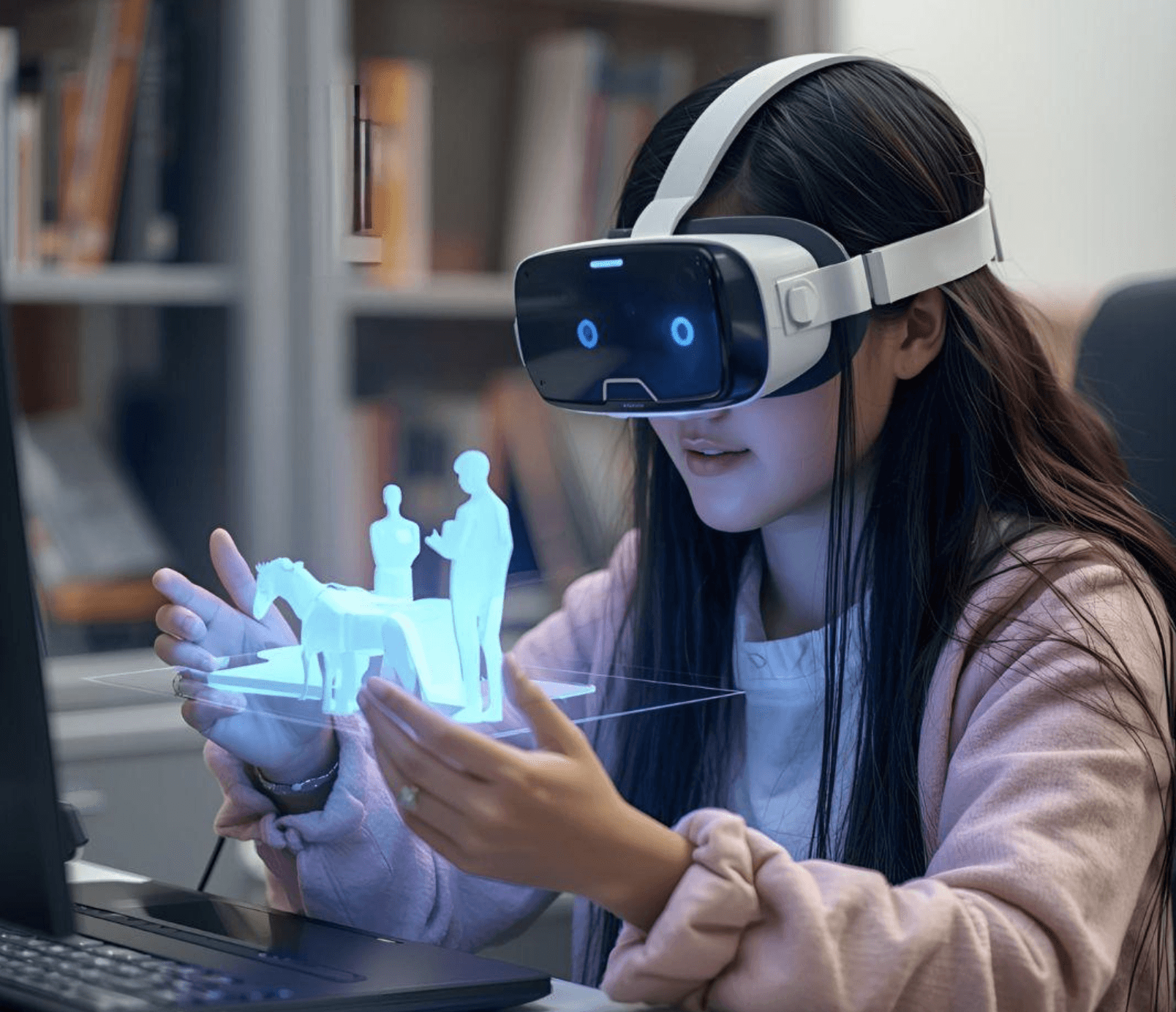
If you are interested in AR/VR or metaverse projects, contact us and lets start your project today!
Will using AR take away from traditional teaching methods?
Do students need special equipment like AR glasses to participate?
How can I start using AR in my classroom if I’ve never tried it before?
Can't find the question you are looking for?
Send us a message and we'll get back to you as soon as possible!
Tell us where your AI is stuck.
An idea, a stalled pilot, or a phone that won't stop ringing unanswered – the first call is a working session, not a pitch.